How Extended Schedules Influence Betting Lines in Basketball, Cricket, and Boxing
Quinn Berger · Aug 16, 2026
How Extended Schedules Influence Betting Lines in Basketball, Cricket, and Boxing
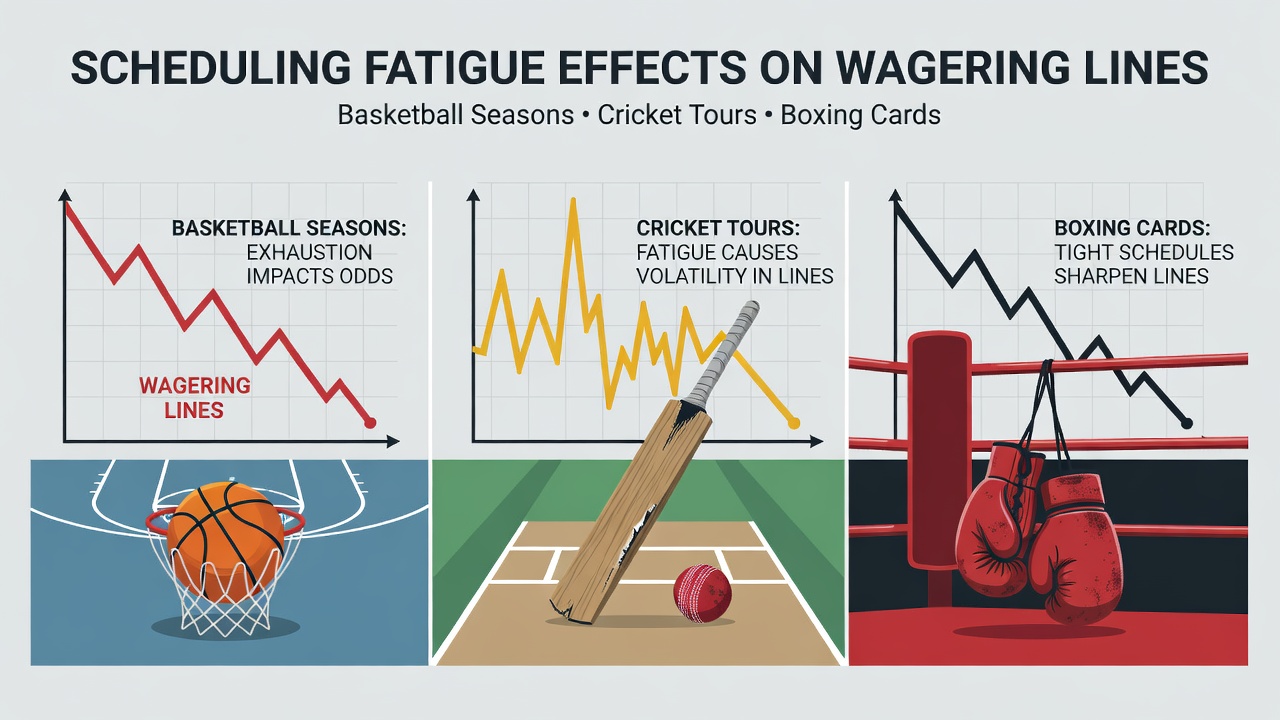
Extended calendars across professional sports create measurable shifts in wagering lines as fatigue accumulates through repeated high-intensity efforts, and observers note these patterns most clearly in basketball seasons that stretch from October through June, cricket tours spanning multiple continents over several months, and boxing cards that stack bouts within short recovery windows. Data from league records and performance analytics firms show that teams and athletes with fewer rest days between events experience drops in key metrics such as shooting accuracy, batting averages, and punch output, which in turn move point spreads, totals, and moneyline odds at sportsbooks.
Basketball Season Patterns
National Basketball Association schedules include back-to-back games and three-games-in-four-nights stretches that researchers at sports medicine institutions link to reduced player efficiency ratings, and these declines appear in betting markets when oddsmakers adjust totals downward by two to four points for teams playing on the second night of a back-to-back. College basketball conferences add conference tournaments immediately after regular-season slates, creating similar recovery gaps that analysts track through advanced metrics like true shooting percentage and defensive rating; one study published by a university sports science department found that squads with less than 48 hours between games posted 8 percent lower offensive output compared with teams granted three or more rest days.
Betting exchanges respond to these patterns by widening lines on unders for total points when both participants arrive with heavy travel and limited rest, while sharp bettors often target player prop markets on minutes played and points scored for starters logging heavy loads. August 2026 marks the start of training camps for the 2026-27 NBA season, and preliminary schedule releases already flag early-season road trips that cross multiple time zones, prompting oddsmakers to incorporate travel fatigue models into opening lines for November contests.
Cricket Tour Dynamics
International cricket tours combine Test matches lasting up to five days with limited-overs formats that demand different physical and mental demands, and governing bodies such as the International Cricket Council publish fixture lists that sometimes compress series into six-week windows with minimal rest between formats. Performance data compiled by national boards indicate that bowlers experience declines in speed and accuracy after consecutive matches without recovery periods, which translates into lower run totals in limited-overs games and adjusted over/under lines offered by bookmakers. Batting lineups facing spin-friendly pitches after long flights show reduced strike rates, prompting market makers to shade totals and adjust series handicap markets accordingly.
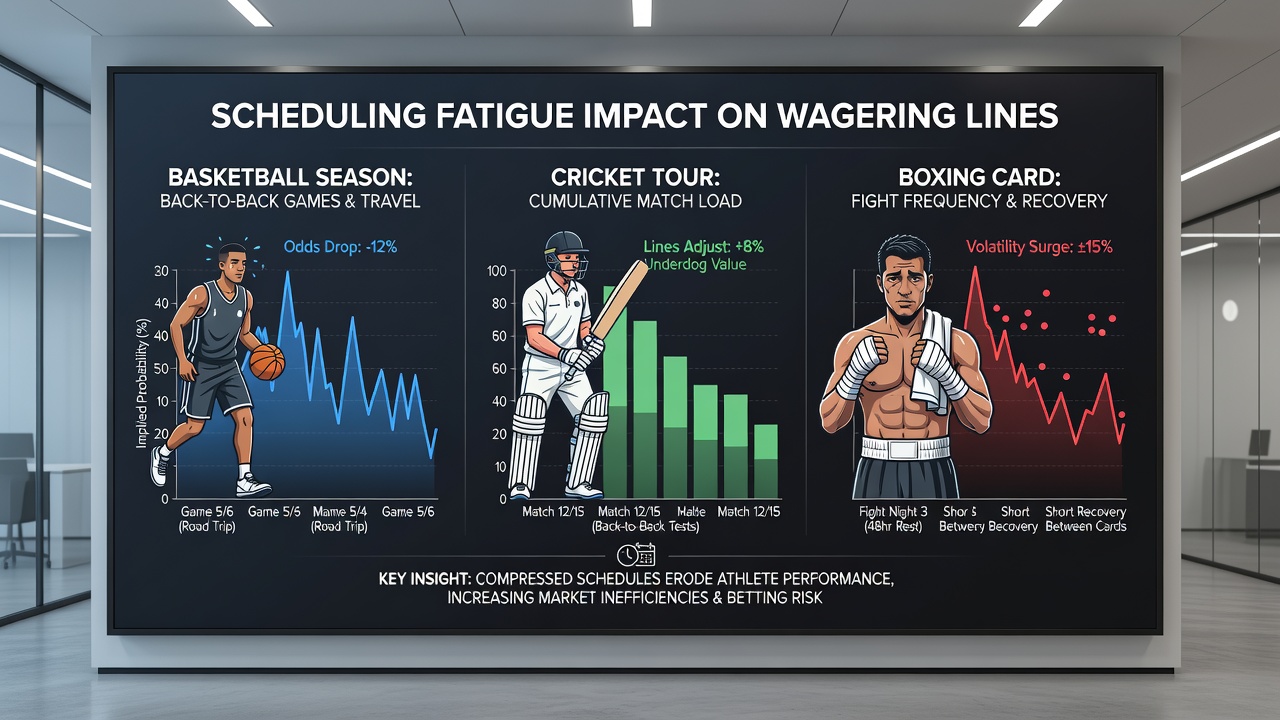
One academic paper from an Australian research institute examined multi-format tours and found that players participating in three or more consecutive matches recorded a 12 percent drop in key performance indicators, information that sportsbooks integrate when setting live odds during ongoing series. Bettors who monitor squad rotation announcements gain edges in futures markets on series winners, because captains often rest key players when fixture congestion peaks mid-tour.
Boxing Card Considerations
Professional boxing events frequently feature undercards that run several hours before main-event bouts, and fighters appearing on the same card with short turnaround times between weigh-ins and ring walks encounter cumulative fatigue that affects punch volume and defensive reaction times. Records from state athletic commissions and fight outcome databases reveal that bouts scheduled later in the evening produce higher rates of late stoppages when both participants have already competed or waited through extended undercard action. Oddsmakers adjust round totals and method-of-victory lines based on historical patterns tied to card length and fighter recovery intervals.
Promotional schedules released for 2026 events include several multi-fight cards clustered within regional tours, and early odds for those events already reflect adjustments derived from past performance data on fighters with limited rest between appearances. Industry reports from European boxing federations document that athletes traveling across time zones for back-to-back events show measurable drops in training metrics, prompting further line movement in prop markets such as total punches landed and fight duration.
Market Adjustments Across Formats
Betting operators compile historical datasets that correlate rest differentials with scoring outcomes, then apply those models to opening lines for upcoming fixtures in all three sports. When public betting volume concentrates on favorites regardless of rest, sharp action often moves lines toward the value side that accounts for fatigue, creating opportunities tracked by syndicates that specialize in schedule-based angles. August 2026 brings overlapping international windows in cricket and basketball preseason activity, which analysts expect will generate additional line volatility as overlapping rest and travel demands intensify.
Conclusion
Performance records and market data confirm that scheduling fatigue produces consistent, quantifiable effects on wagering lines in basketball, cricket, and boxing, and these effects intensify when calendars compress recovery periods between events. Operators and bettors alike rely on statistical models built from league archives and academic studies to anticipate line movement, while governing bodies continue releasing fixture lists that shape future betting opportunities well in advance of each season or tour.